

A quick word on that balance, in case you are new here. The only way anybody ever ended up holding it was by owning a node and running it. There was no public sale to speculate into and no airdrop to farm, so the balance is simply a receipt for having run infrastructure. Those are the people we are talking to, and it is why the whole design points back at operating rather than at holding.
$FORK is a new token, and strictly speaking nothing forces us to carry an older position across into it. We are choosing to anyway. We are honoring those operators in $FORK to keep them in the community we are building now, because these are the people who already know how to run a node, and we would rather have them back online than start from an empty room. So the airdrop is built to reward exactly that, and to be worth very little to anyone who only wants to flip a balance.
It arrives sealed, and chained
Every legacy holder is minted a capsule. You do nothing to receive it. No claim, no transaction, no gas. It simply appears in your wallet holding your entire $FORK entitlement, and it arrives locked, wrapped in a chain. Owning the capsule is not the same as being able to open it.
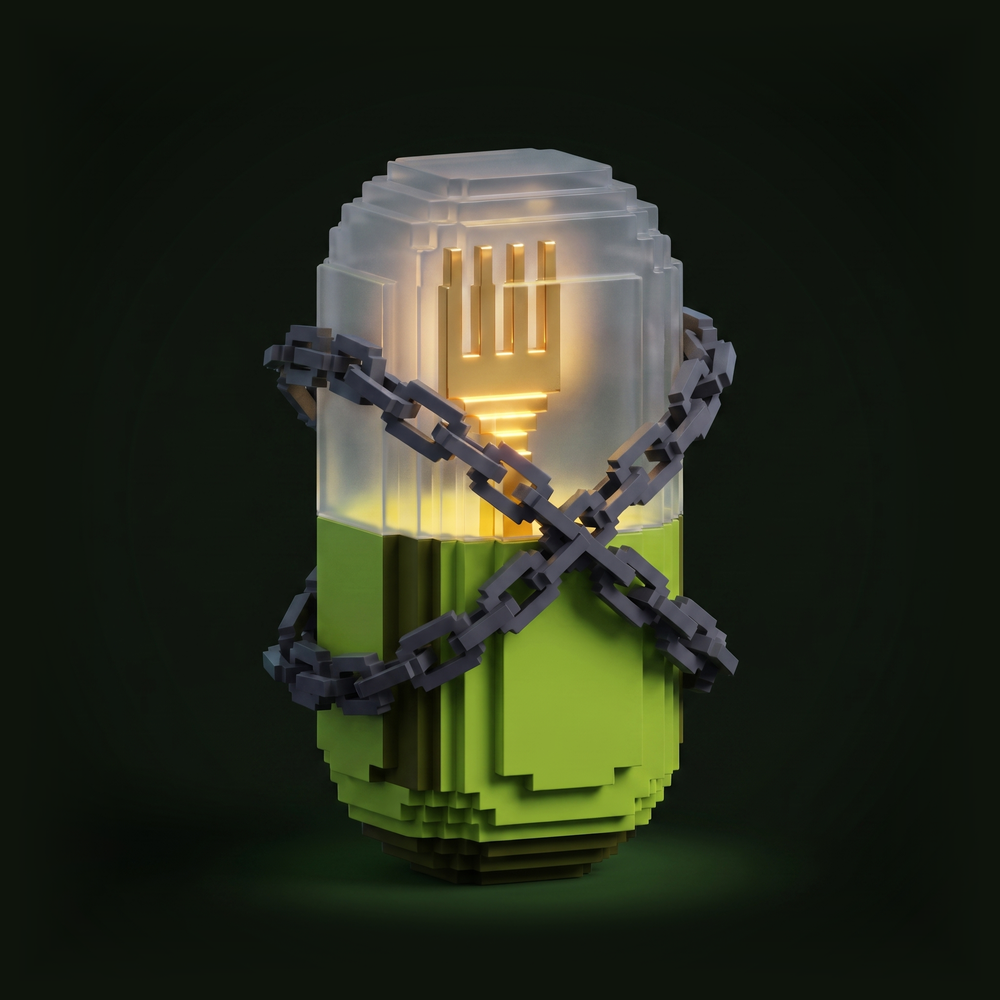
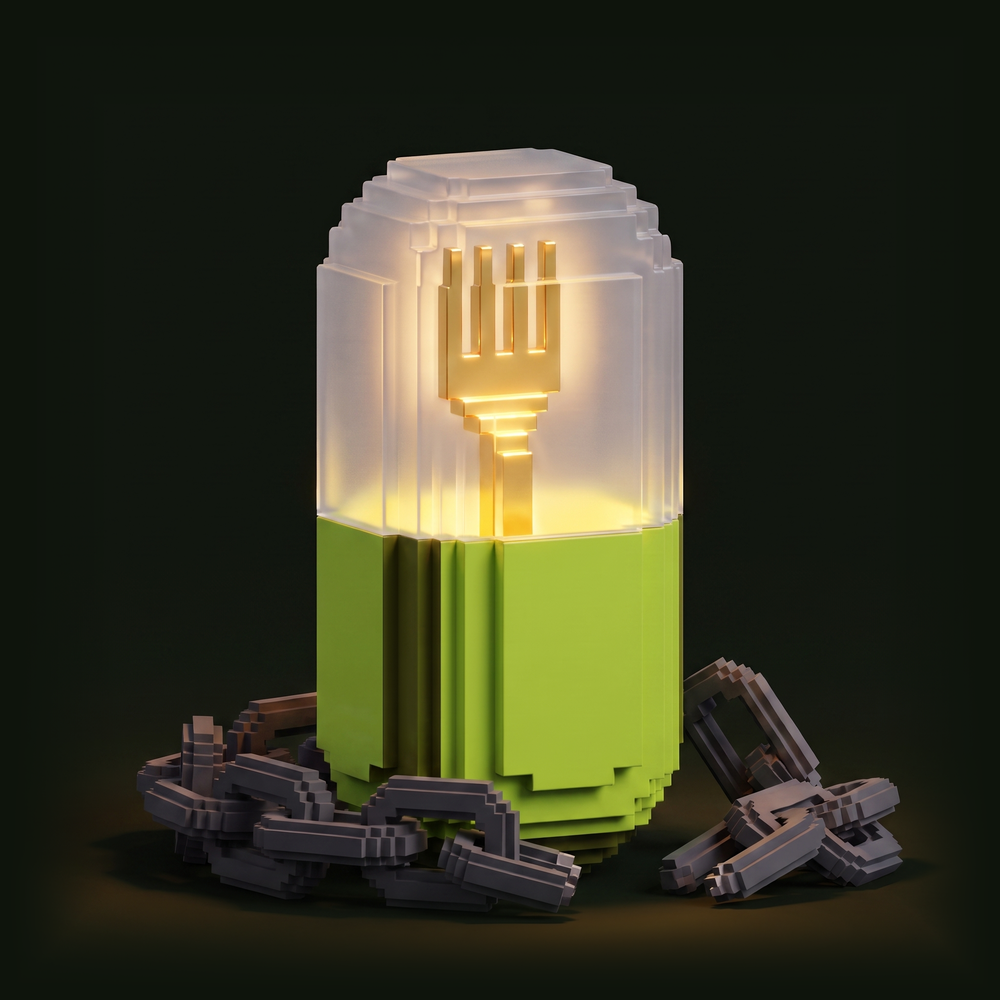
Run a node. The chain breaks.
The key is uptime. Once the wallet holding a capsule has run a Forked node for one hundred hours, roughly four days, the chain snaps. Node licenses carry across one for one, so the hardware you need is already yours. Only current uptime counts toward the hundred hours. Time logged before the capsule does not carry over, because the point is to get nodes back online now, not to reward a number from the past.
This is also why a capsule cannot be shortcut. The hundred hours are checked against whoever is holding it at the moment they try to open it. Nobody inherits somebody else's progress, and nobody buys their way past the gate.
You open it once
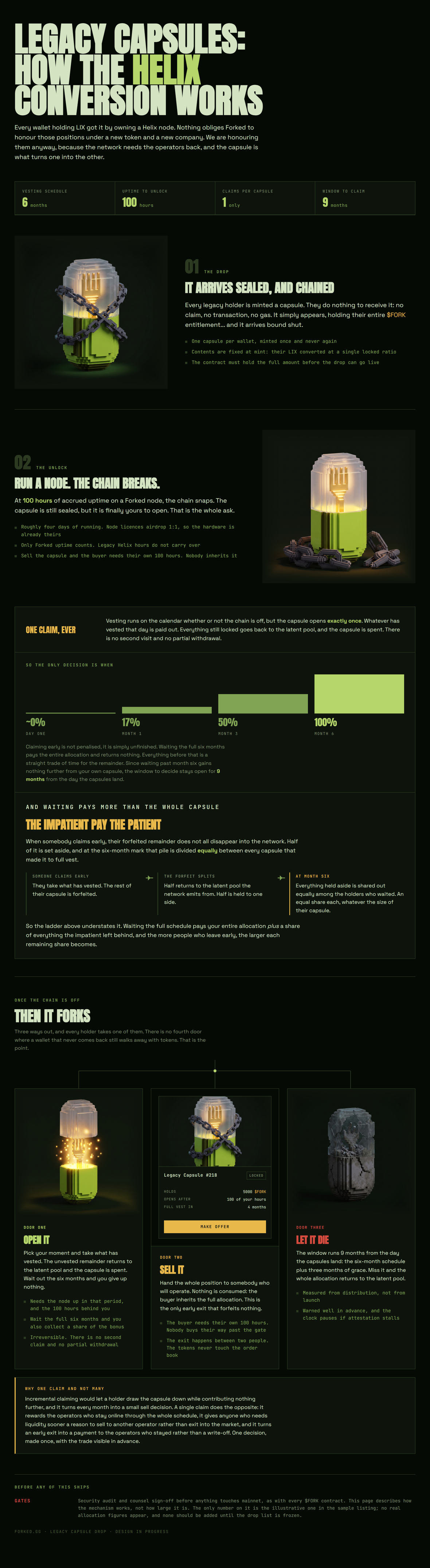
Here is the part that is different from a normal vesting schedule, and it is worth reading twice. The capsule fills up over six months on a straight line, and you open it exactly once. Whatever has filled up by the moment you open it is paid to you. Whatever has not is returned to the pool the network pays operators from, and the capsule is spent.
So the only real decision is when. Open it in the first month and most of it flows back to the pool. Wait the full six months and you take the entire allocation and give up nothing. Everything in between is a straight trade of time for the remainder. Nobody is punished for claiming early. They are simply choosing to leave part of it behind.

And waiting pays more than the whole capsule
When somebody opens early, the part they leave behind does not all vanish into the network. Half of it goes back to the operator pool, and half is set to one side. At the six month mark, everything set aside is shared out equally among the capsules that waited the full schedule. An equal share each, whatever the size of the capsule.
Put those two facts together and the shape is simple. Waiting the full six months pays your whole allocation, and then pays a little more on top, funded by the people who did not wait. The more who leave early, the larger each remaining share becomes. The patient are paid by the impatient, which is the opposite of how most of these things usually run.
Three doors, and no fourth one
Once the chain is off, every holder walks through one of three doors.
Open it. While your node is running, take what has filled up. Wait the full six months first and you also collect a share of the bonus. It is one decision, made once, and it is final.
Sell it. Hand the whole position to somebody who will operate. Nothing is consumed by the sale, so the buyer inherits the full allocation, and this is the only way to exit early without leaving anything behind. The catch is the one that makes the whole system work: the buyer still needs their own hundred hours. A capsule on the market is a locked capsule to whoever buys it. You can sell the tokens, but you cannot sell the shortcut, which means a capsule can only ever move toward somebody willing to run a node.
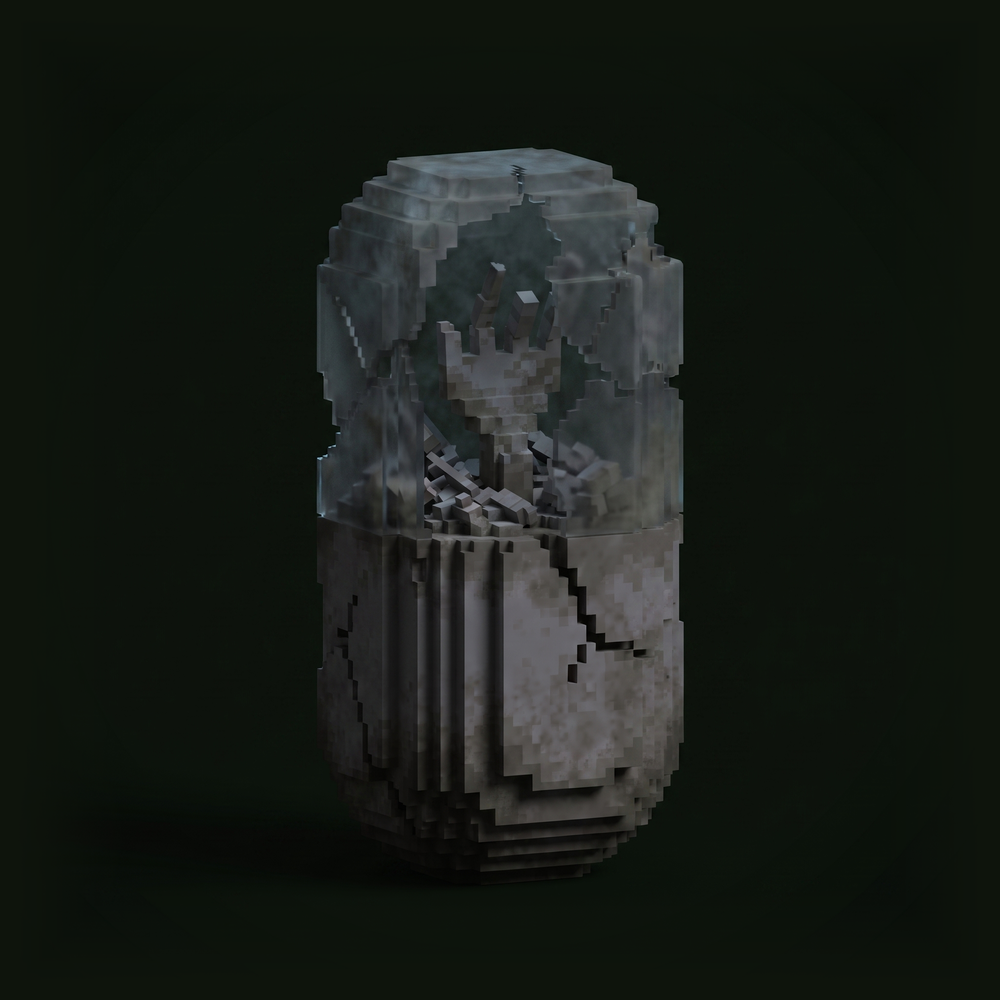
Let it go. Do nothing and the capsule expires nine months after the drop. Whatever is still inside returns to the operator pool. There is no fourth door where a wallet that never comes back still walks away with tokens, and that is deliberate. It is what lets us honor real operators generously without leaving a pile of unclaimed supply hanging over everyone else forever.
Why go to this much trouble
A flat swap would have been easier to build. Hand every old wallet some liquid $FORK and walk away. The problem is that a flat swap hands the largest reward to the people least likely to ever run a node again, and it dumps a wave of tokens onto the market on day one. Neither of those helps the network or the people who stay in it.
The capsule fixes both. It converts a dormant balance into a reason to come back and operate. It moves every early exit off the open market and into a private sale between two people, so the tokens never hit the order book. And it puts a clock on the wallets that never return, so the old overhang clears within a year instead of shadowing the token for years. The whole thing is one instrument doing the job of an incentive, a lockup and a cleanup at the same time.
It is also, if you want the plain version, a better deal for you than a plain vest would have been. Same six-month schedule you would have faced anyway, plus the ability to sell the whole position at any time, plus a bonus for staying. You give up one thing in return, which is the requirement to actually run a node. Given how you got here in the first place, that felt like the fair ask.
Before you ask the obvious questions
None of this is live yet. The contract is written and tested, the artwork is done, and the mechanism is exactly what you just read, but nothing has been deployed, nothing has been distributed, and the specific allocation numbers are still being finalized against the frozen snapshot of legacy balances. Like everything else that touches the token, it goes through a security audit and legal review before it reaches anyone. We are showing you the design now, in full, because we would rather you understood the shape of it early than discover it on the day it lands.
When it is ready, it will show up in your account next to your nodes, with the numbers that matter in plain sight: how much is inside, how much has filled up, how many of your hours are on the board, and exactly what opening early would cost you. One decision, made once, with the trade visible in advance.
If you ran nodes for us early on, this is us keeping faith with that. Come back and run one, and the chain comes off.