The thing nobody in gaming wants to say out loud
You do not really own the games you buy. You own a license that can be pulled, a server that can be switched off, a world that can vanish the day a studio decides it is not worth the hosting bill. It happens all the time. A game you poured a thousand hours into goes dark, the servers shut down, and it is just gone. No backup, no museum, no way back in.
Players are tired of it. The loudest movement in gaming right now is a plain request: let me own my stuff, and let the games I love keep living. Call it nostalgia if you want, but it is really people asking for the same deal they already get with a book or a record. Something that stays theirs and sticks around.
Why the industry can't fix this alone
Keeping a game online forever costs money that nobody wants to pay once the game stops selling. There is no business case for a studio to run servers for a ten-year-old title with a few thousand die-hards left. The incentives point the wrong way, and good intentions do not pay for machines.
This is where web3 actually earns its keep. Underneath all the noise, the genuinely useful part is simple: a way to pay a spread-out crowd of people to keep something running, and to prove they are really doing it, without one company carrying the whole cost. Put the work across a lot of small operators, give them a real reason to show up, and a game can outlive the studio that made it.
Games are being switched off faster than anyone is saving them. Keeping them alive is a job too big and too unprofitable for any single studio to carry. A paid, provable, worldwide crowd is how that math finally works, and it is what we are building toward.
That is why Forked.gg exists. We want to help studios keep their games online, and we want players to own what they play. The last three weeks were us building the pieces that turn that from a nice idea into something actually running.
FORKcast is live
Our prediction engine went public. Pull up any stream, call the outcome of a match or a moment, put your points behind it, and climb the board. No wallet, no buy-in, none of your own money at risk. It is free, it is fun, and it is the front door to everything else.
Your time actually counts
We tuned the Forked Discord so hanging out pays off. Good conversation earns points, newcomers get met at the door instead of landing in silence, wearing the Forked tag banks you a little every day, and all of it now crosses over into FORKcast. Show up, get a head start.
Don't trust us, check for yourself
Every pick, pool, and payout in FORKcast now gets sealed into a public record that anyone can audit. We also put up a manifesto that says it straight: do not take our word for anything, go verify it. That is the bar we want to be held to.
A network that spans the planet
Here is the piece that ties back to keeping games alive. We took a community-run network of machines live across the world and had it hold real data, then prove over and over that it was still holding it, even after we knocked machines offline on purpose to see if it could recover. A hosting partner brought a whole fleet of their own boxes online on top of that. This is the backbone of the persistence idea. Lots of independent operators, all paid to keep things alive, all provably doing the job.
We also stood up a small community game world of our own and left it running for anyone to jump into. It is a little thing, but it is the point of the whole exercise. The network is starting to do what we built it for.
Some free stuff, because it should be fun
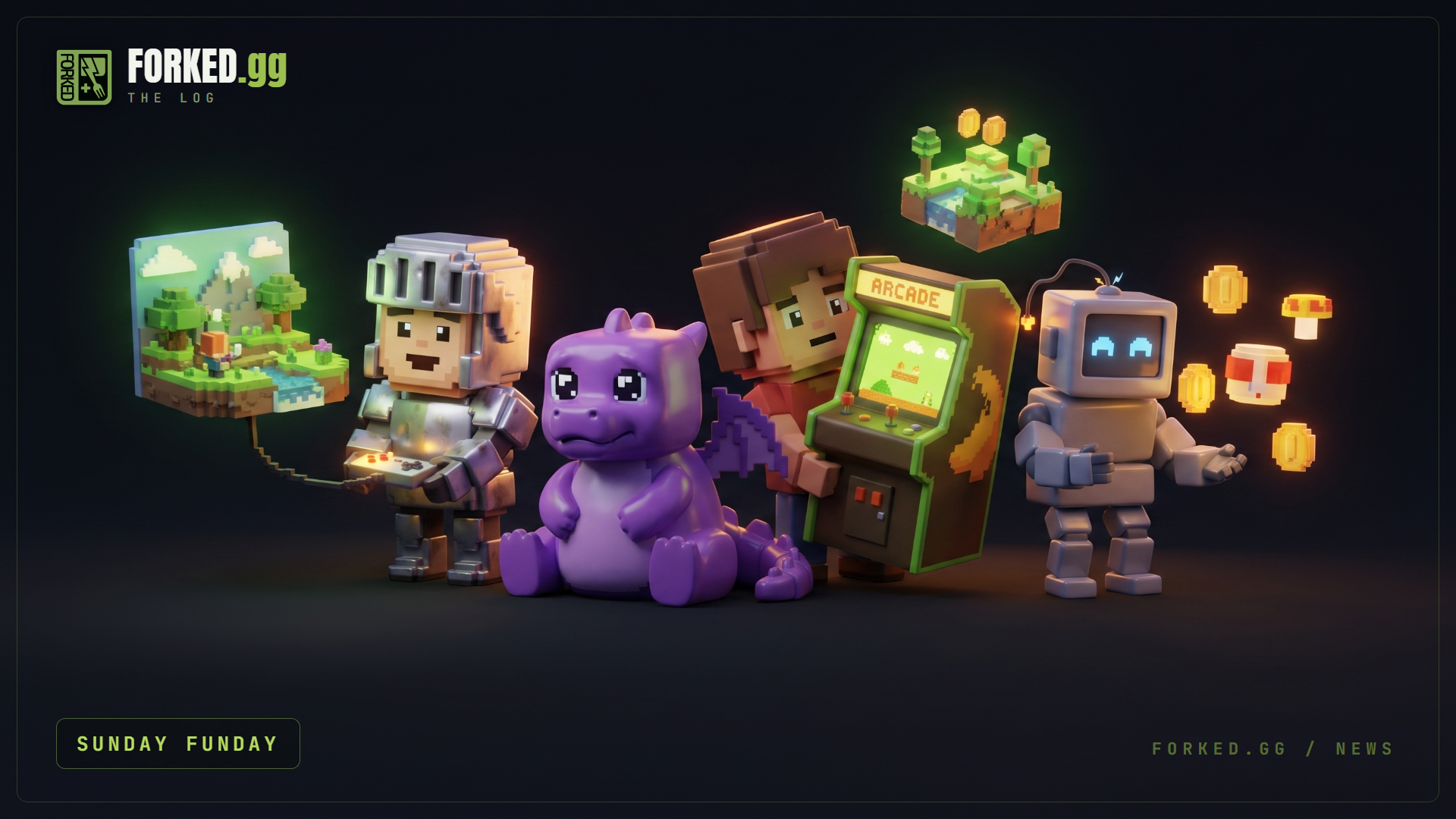
We made the Forkies, a big cast of chunky voxel collectibles, and started sending them out into the world. Free, one per person, yours to keep. No catch.
Where this is heading
The road ahead runs on the idea up top. Ownership you can actually hold, and games that get to keep living long after the spreadsheet says to shut them down. The industry cannot get there by itself. We think the crowd can.
More next Sunday.